
What’s the Difference Between a Licensed and Professional Land Surveyor?
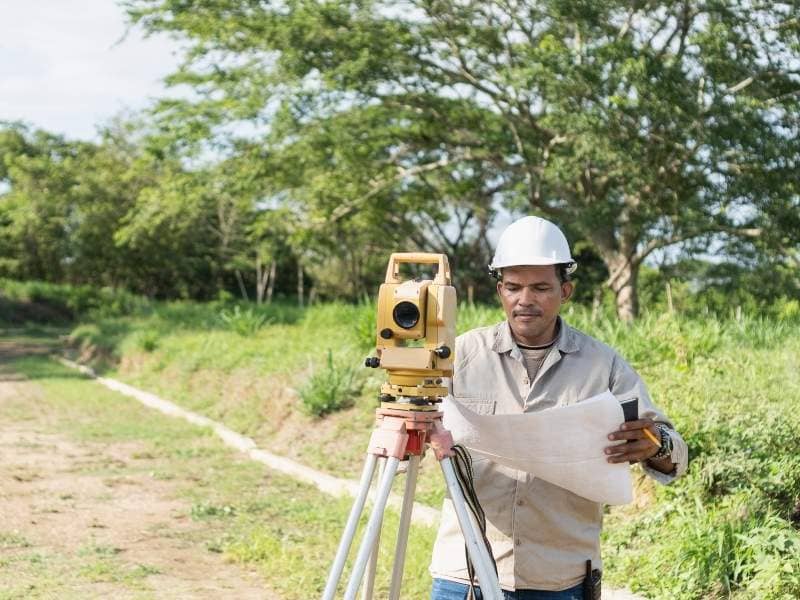
If you’ve ever tried to hire someone to survey your property and come across the titles “licensed land surveyor” and “professional land surveyor,” you’re not alone in wondering whether they mean the same thing. The short answer is that they mostly do, but the distinction matters depending on where you live and what the work involves.
Here’s what those titles actually mean, how California handles it, and what to look for when you’re hiring someone to do survey work on your property.
The Titles Explained
In most states, including California, the official credential for someone legally authorized to perform land surveys is “Professional Land Surveyor,” or PLS. This is a state-issued license, not a job title anyone can give themselves.
The term “licensed land surveyor” is often used interchangeably with PLS in everyday conversation. It’s not a separate credential. It simply refers to the fact that the person holds a state license to practice surveying. When most people say “licensed surveyor,” they mean the same person as a PLS.
What matters is not which phrase appears on a business card. What matters is whether the person holds an active state license and whether that license covers the type of work you need done.
How California Licensed Land Surveyors
California is one of the more structured states when it comes to surveying credentials. The California Board for Professional Engineers, Land Surveyors, and Geologists oversees the licensing process.
To become a licensed Professional Land Surveyor in California, a candidate must:
- Hold a degree in surveying, civil engineering, or a closely related field, or have equivalent documented work experience
- Complete a minimum of two years of work experience under the supervision of a licensed PLS
- Pass the National Council of Examiners for Engineering and Surveying (NCEES) Fundamentals of Surveying exam
- Pass the NCEES Principles and Practice of Surveying exam
- Pass a California-specific surveying exam covering state laws and practices
The full process typically takes several years. Someone who has gone through all of it has earned the credential through both education and field experience, not just a test.
Under California Business and Professions Code Section 8726, only a licensed PLS, or someone working under direct supervision of one, may legally perform boundary surveys, prepare legal descriptions, or set property monuments. This is not a formality. Hiring an unlicensed person to do this work creates legal and title problems that can follow a property for years.
What About Surveying Technicians?
Many survey firms employ technicians and field crews who do a significant portion of the physical work. These individuals are skilled professionals, but they are not licensed surveyors. They work under the direction and supervision of the licensed PLS, who is responsible for the final survey product and stamps it with their license number and seal.
When you hire a survey firm, the licensed PLS is the person whose name and seal appear on the finished document. That’s the person legally responsible for the accuracy and completeness of the work.
Why It Matters for Your Project
For most residential property owners, the practical question is simple: is the person you’re hiring licensed to do survey work in California, and is their license current?
You can verify a California surveyor’s license through the Department of Consumer Affairs license lookup tool. The search takes about 30 seconds and tells you whether a license is active, expired, or subject to any disciplinary action.
This matters most in three situations:
- Boundary surveys and property disputes. Only a licensed PLS can produce a survey that carries legal weight in California. An unlicensed person’s work has no legal standing for resolving disputes, filing with the county, or supporting a permit application.
- Legal descriptions. Writing or revising the legal description of a parcel requires a PLS license. This comes up in lot line adjustments, subdivisions, and some easement work.
- Monument setting. Placing or restoring corner monuments on a property boundary is restricted to licensed surveyors under California law.
For general site measurement, construction staking, or topographic work tied to an engineering project, the requirements vary. In those cases, a licensed civil engineer may also be authorized to perform certain tasks. Your project type determines who needs to be involved.
Questions to Ask Before You Hire
Most people don’t know what to ask when they’re looking for a surveyor. These questions will help you make a confident choice:
- Is the lead surveyor on this project a licensed PLS in California?
- What is their license number, so I can verify it?
- Have you worked on properties with similar characteristics, such as hillside lots, older deeds, or disputed lines?
- Who signs and stamps the final survey document?
A reputable firm will answer all of these without hesitation.